Artex Asbestos Removal From an HSE Licensed Team
Found asbestos in your artex ceiling and want it removed by an HSE licensed contractor? Every time that coating gets sanded, scraped or drilled into, it releases fibres you cannot see, and those fibres cause mesothelioma and lung cancer decades later.
We have been removing artex and textured coatings safely for over 30 years. Call us on 0239 307 2182 and we will talk you through your options.
Get In Touch With Our Artex Removal Team
Prefer to complete a form? Tell us what you have and where it is, and one of our team will come back to you the same day. Photos of the ceiling help if you have any.
30+ Years Experience
24-Hour Response
HSE Licensed and Insured
5-Star Reviews

What To Do If You
Think Your Artex Contains Asbestos
Stop before anything touches the ceiling.
Do not sand it before decorating. Do not score or key the surface for plaster. Do not drill into it for downlighters, coving or a light fitting. Do not scrape it dry. Do not brush or vacuum flaking debris with a normal hoover, because a domestic vacuum blows the fibres straight back into the room.
Keep everyone out of any room where the coating is cracked, flaking or falling.
Artex in good condition is a different matter. The asbestos content is bound into the coating, and most artex has been painted over several times, which seals the surface further. Leaving asbestos materials undisturbed is often the safer option, and we will tell you when that applies to you.
Send us a few photos through our online enquiry form or on WhatsApp and we will tell you what you are looking at.
How Much Does Artex Asbestos Removal Cost?
The surface the artex is applied to is the biggest single factor, and we have set that out below. After that it comes down to the total area, how many rooms are involved, whether it is ceilings only or walls as well, and the condition of the coating. Removal costs depend on the type and age of artex, and larger areas of artex increase removal labour costs.Two things people do not expect. The number of paint layers matters, because heavily painted artex needs more work to soften before it will come away. And access matters, since a stairwell or a high ceiling needs different equipment to a bedroom.
Then there is the setting up. Sealing off the work area, protecting floors and fittings, and the scale of containment the job needs all form part of the total cost, and on a bigger job they can account for as much as the removal itself. We do not give ballpark figures over the phone. Send photos so we know what we are dealing with, then we arrange a site visit and give you a fixed price in writing with no obligation and no hidden costs.
HSE Licensed and Accredited for Artex Removal
We hold an HSE asbestos licence (No. 262606126) and the accreditations that matter for this kind of work, we are fully insured, and every job is carried out in line with the Control of Asbestos Regulations 2012 and Health and Safety Executive guidance. Our operatives refresh their asbestos awareness training every 12 months.

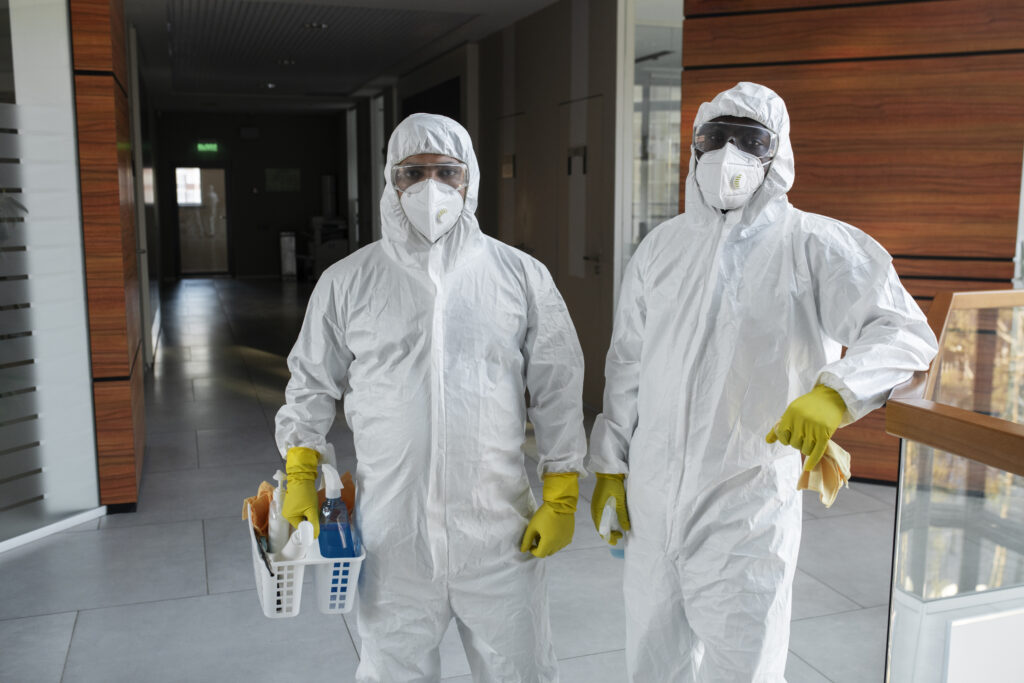
Does Your Artex
Contain Asbestos?
Not all of it does. Age is the first thing to look at.
Artex applied before the mid-1980s is likely to contain white asbestos, known as chrysotile. Between the mid-1980s and 1999 it still might, because manufacturers phased asbestos out at different times and old stock stayed on merchants’ shelves for years afterwards. Asbestos was not fully banned in the UK until 1999, so any coating applied before 2000 should be treated as containing asbestos until a test proves otherwise. Artex applied after that will not contain it.
Artex is a brand name that became the word everyone uses. Textured coatings were sold under other names too, including Wondertex, Suretex, Newtex, Pebblecoat and Marblecoat, and they were made the same way.
The asbestos content is low. Artex can contain up to 4% chrysotile asbestos, mixed into a plaster base to strengthen the coating and help it resist heat.
You cannot visually confirm the presence of asbestos. The pattern, the colour and the age all point one way or the other, but nothing settles it except a laboratory test. Testing is required to confirm asbestos presence in artex, and samples go to a UKAS-accredited laboratory.
Send Us A Photo And We Will Tell You What It Is
You do not need to book anything to find out where you stand. Send a few clear photos of the ceiling, including a close-up of the pattern and one from the doorway showing the whole room, and one of our team will tell you whether it looks like an asbestos textured coating and what your options are.
If you know roughly when the house was built or last decorated, tell us that too. It narrows it down quickly.
Use the online enquiry form or send them straight over on WhatsApp.
Hundreds Have Been Where You Are. Here's What They Say.
Posted on Google
 Paul Downie
Trustindex verifies that the original source of the review is Google.
Very professional and hardworking team. Removed my asbestos roof quickly and safely. I highly recommend.Posted on GoogleFay BartleyI am in the process of selling my flat, and one of the final requirements was an asbestos survey for the communal hallway. From start to finish, I was genuinely impressed by Kacey’s outstanding customer service who made arrangements for the asbestos survey to take place. She demonstrated real passion for her work and a clear commitment to delivering an exceptional customer experience. Kacey even went the extra mile to accommodate my urgent request, helping me avoid delays in the conveyancing process at a crucial stage. Due to the unavailability of their London based surveyor, the Director of the company personally carried out the survey—another sign of how Meyer Surveys Limited truly stands out when it comes to customer care. He upheld the same high standards, was extremely friendly and helpful, and took the time to walk me through the entire process. I can confidently say this company is the crème de la crème of their industry. I have no doubt that the same level of excellence runs through all the services they offer. Kudos to the entire Meyer Surveys Limited team, I will definitely be referring you.Posted on GoogleChristian CageFrom start to finish the team at Meyer were fantastic and assist every step of the way when completing an asbestos survey from me at a new property. The surveyor was personable, polite and professional, a really asset to any organisation. I would recommend Meyer to everyone who required there services.Posted on GoogleNick HouseVery good service, arrived exactly when they saidPosted on GoogleClaire KenyonMeyer Southern were fantastic. They got back to me really quickly with quotes and answered all the questions I had. They kept us informed every step of the way. The report for the asbestos survey was very detailed and the quote for removal was clear and fair.Posted on GoogleMatthew SimmondsAbsolutely great company to work with from start to finish: most competitive quote, communication was excellent (over both email and phone), turned up when they said the would, and most importantly did a really professional job of the asbestos removal. Can't recommend highly enough!Posted on GoogleSally HaresignGood company to works with very customer focussed and practical approachPosted on GoogleSarah LaneJust to say a massive thank you for all the work the colleagues at Meyer have undertaken for us over the years - you have all been very helpful, professional and put our minds at ease with how the removal team has disposed of the asbestos. We are so appreciative of how far you travelled (to north Wiltshire) in order to take the waste away and none of the various jobs you have done for us were too big or too small to carry out. Not once did I doubt how eminently capable Meyer were throughout the process and would highly recommend them to anyone who needs such hazardous waste removal services. Sarah and Neil, north WiltshirePosted on GoogleChristine EssexMeyer Southern were the most competitive in all quotes received to remove the asbestos roof from my garage. They turned up when they said they would and did the job specified on time. I would recommend Meyer Southern.Posted on GoogleJohn GroveThey did exactly what we asked for


How We Remove Artex Asbestos In 4 Simple Steps
Every job runs the same way, whether it is one bedroom ceiling or every ceiling in the house.
Site Survey, Testing And Planning
We start by confirming what the coating is. Where it has not been tested, our surveyors take a small sample and send it to a UKAS-accredited laboratory. Our surveyors are qualified to BOHS P402 standard or higher. A sample is enough when the artex is the only thing in question. A full asbestos survey is needed for suspected asbestos materials elsewhere in the property, or where the work forms part of a wider refurbishment. If you need the whole property looked at, our asbestos survey team handles that. The result tells us the asbestos content, the condition of the coating and the surface underneath. That is what the removal plan and your fixed price are built on.Safe Containment And Removal
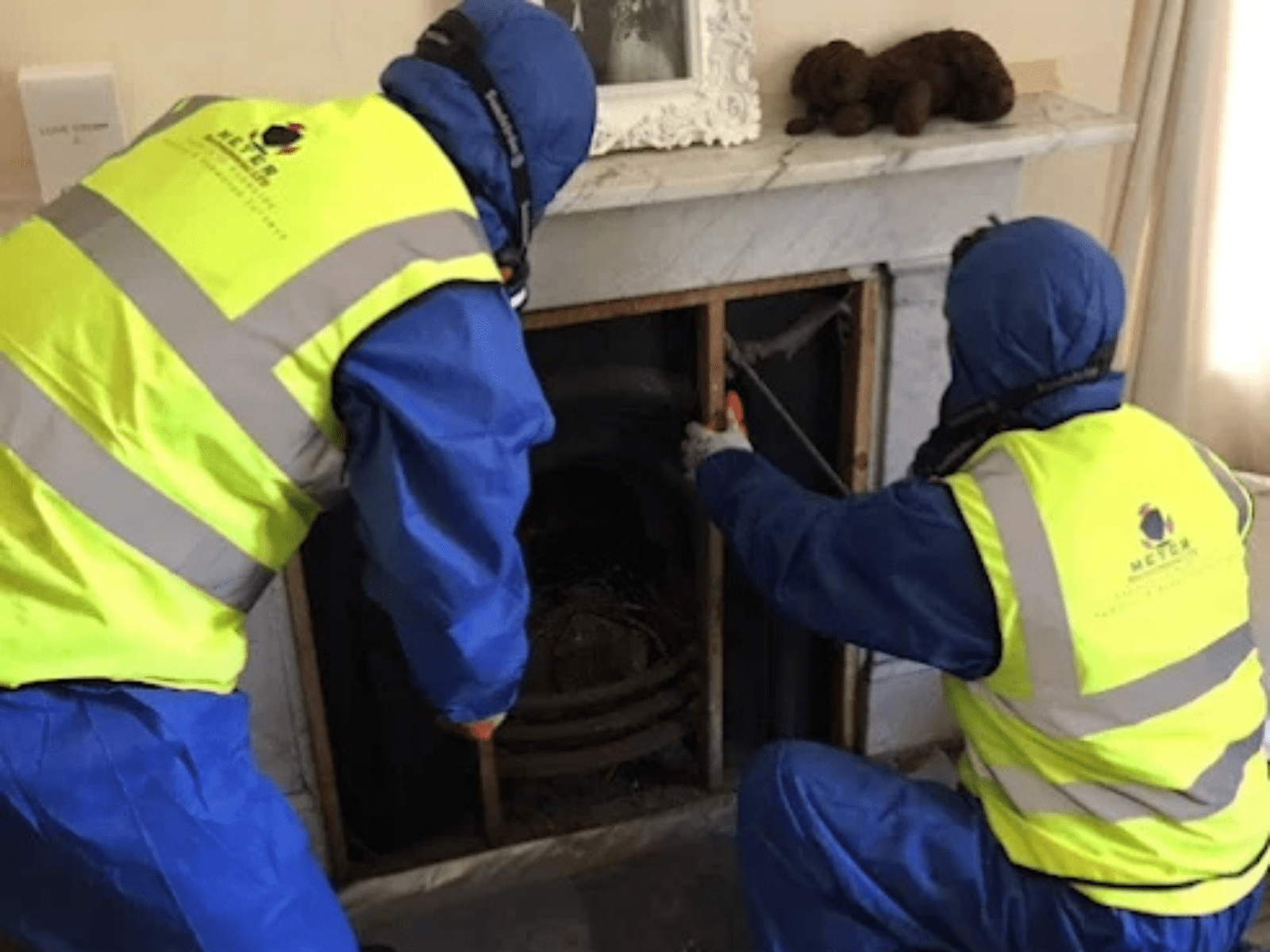
The work area is sealed off and signed before anything starts, with floors and any fittings protected. Our operatives work in disposable coveralls and fitted respiratory masks, to a method statement and risk assessment agreed in advance. The coating is kept wet throughout. Wet-working methods must be used to ensure fibres do not escape into the air, so nothing is scraped dry, nothing is sanded, and no power tools go anywhere near the material. Using power tools on asbestos-coated surfaces is dangerous and prohibited. Small areas of asbestos-containing textured coating can sometimes fall within non-licensed work. Larger areas are classed as notifiable non-licensed work, which we notify to the HSE. Where the coating sits over insulation board, the job becomes licensed removal, which means a 14-day notification to the HSE and a full enclosure.Certified Asbestos Disposal
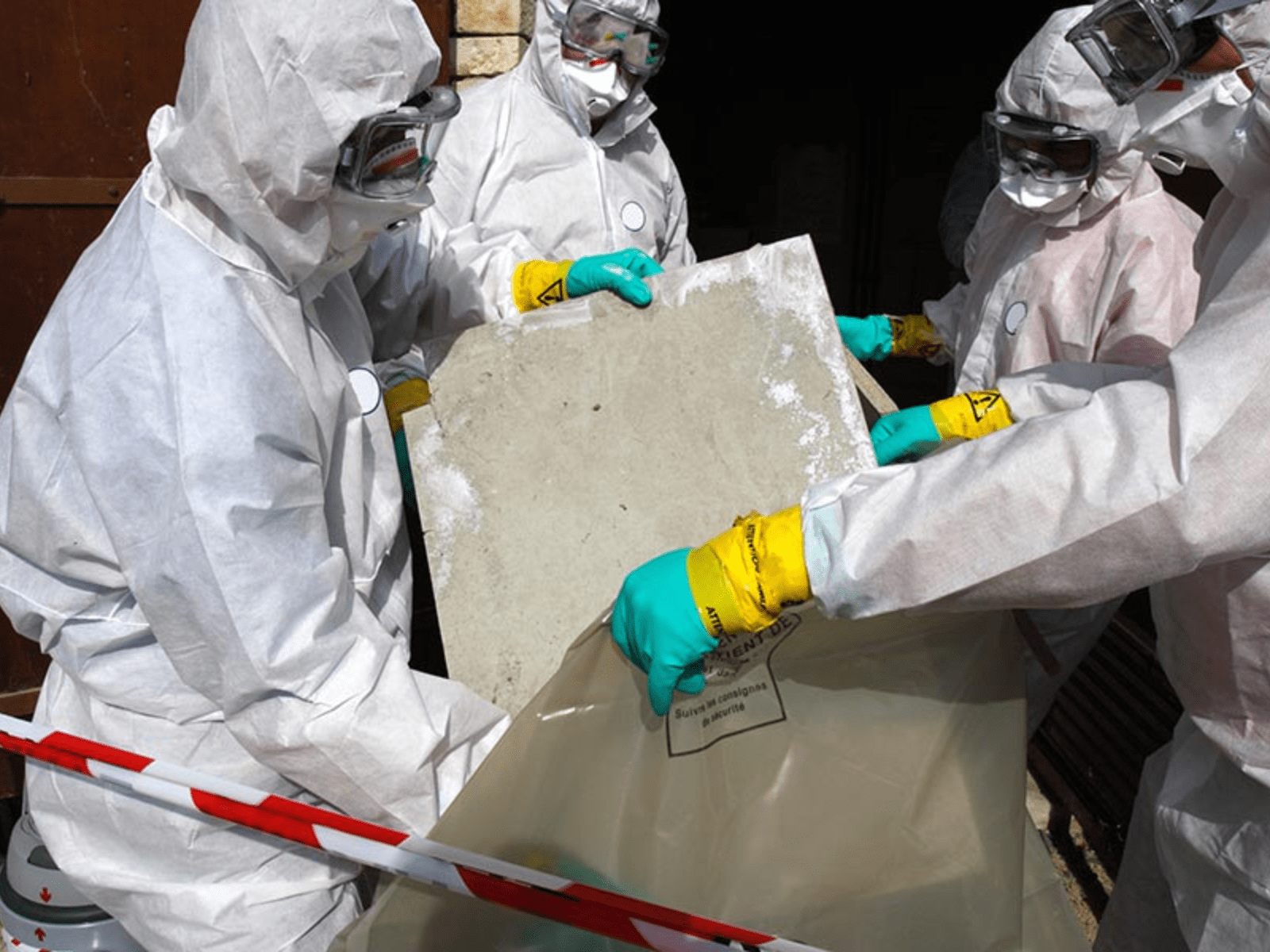
All asbestos waste must be double-bagged and labelled as hazardous, and that is how it leaves your property. It is consigned to a licensed hazardous waste facility, not a skip and not the tip.If you already have asbestos on site that someone else has taken down, we can arrange collection and disposal with the same paperwork.
Final Clearance And Cleaning
Once the material is off site we clean the area down and decontaminate our operatives and equipment. Air monitoring confirms the room is clear before the sheeting comes down, and licensed jobs end with a four-stage clearance air test. You receive a hazardous waste consignment note and full disposal documentation as your proof the job was done legally.Recent Artex Removal Projects Across The UK
Real ceilings, stripped and cleared. Have a look at what the work involves and how a room is left once the job is signed off. You can see more of our recent asbestos projects across the UK in the full portfolio.
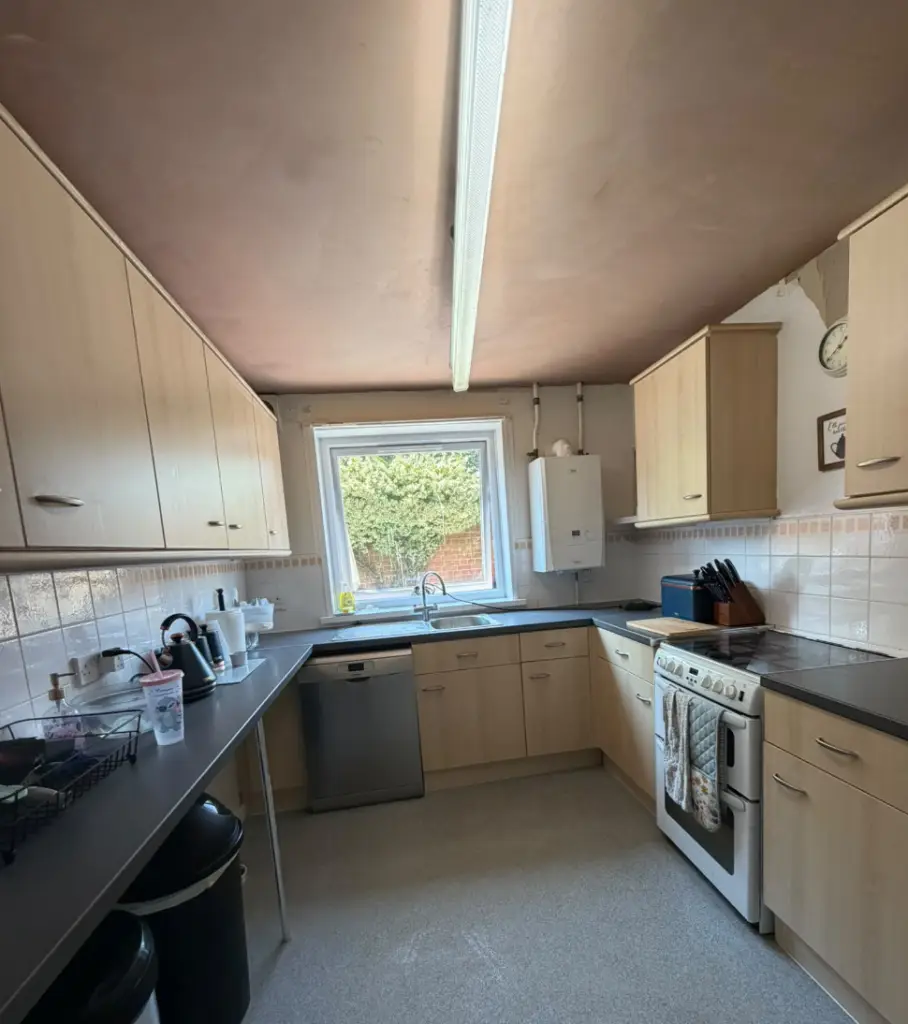
Asbestos Removal Project – Salisbury, Wiltshire
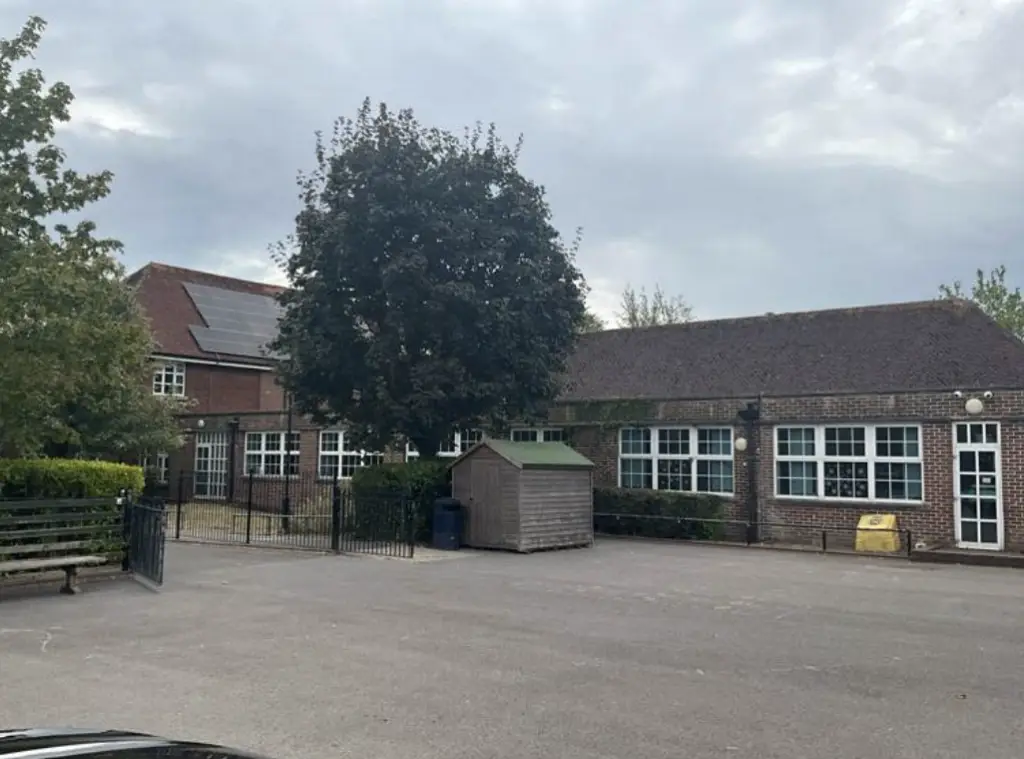
Refurbishment Asbestos Survey at Dorchester Middle School, Dorset
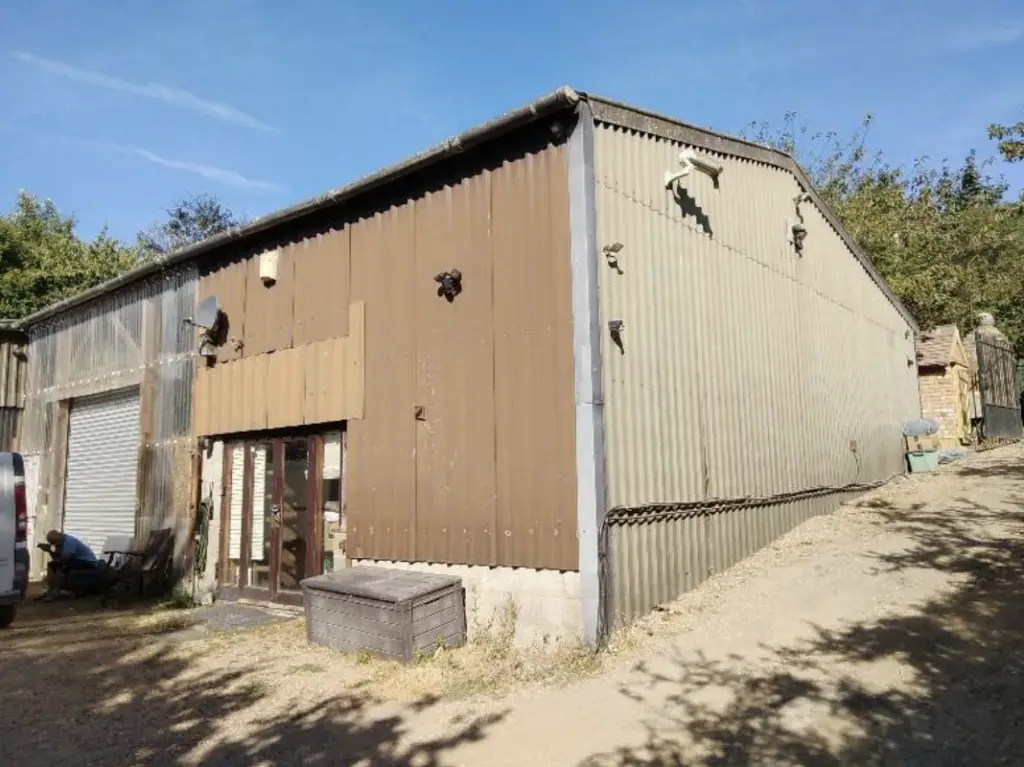
Refurbishment Asbestos Survey at Barn House, East Sussex
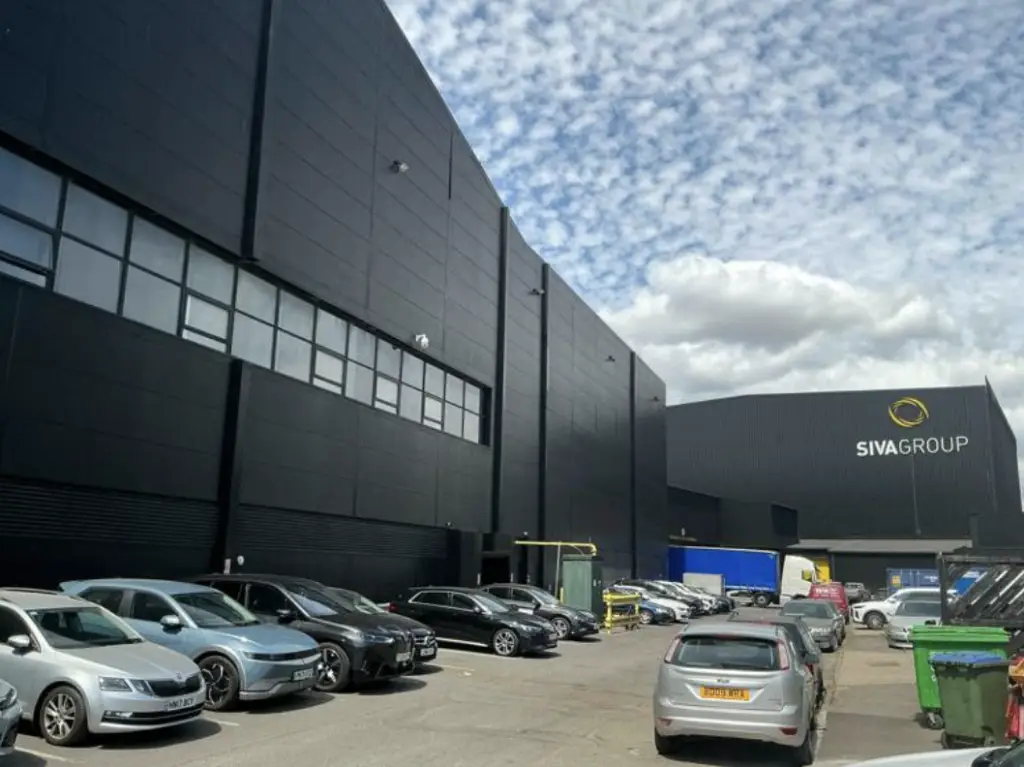
Targeted Refurbishment Asbestos Survey at Spitfire House, Southampton
Asbestos Ceiling Removal and Reinstatement – Portsmouth
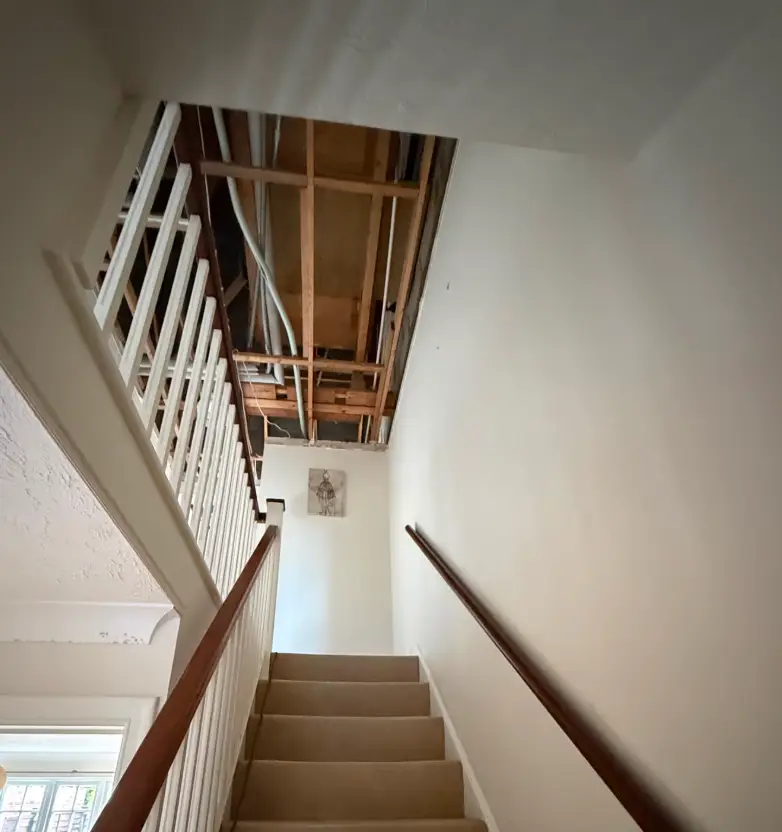
Asbestos Removal Project – Hamble-le-Rice, Southampton
Why The Surface Underneath Changes The Price
The artex itself is only half the job. What sits behind it decides how the coating comes off, how long it takes and what you are left with. There are four you will normally find.Plasterboard
Usually the most straightforward. Plasterboard can be removed entirely to eliminate artex, taking the coating with it in one piece rather than scraping it off in the room. Faster and cleaner, but you are left with an open ceiling that needs reboarding.Lath And Plaster
Common in properties built before the 1940s. Scraping is not practical on lath, so the ceiling normally comes down in full.Plaster Over Brick Or Concrete
The plaster skim comes off back to the original surface using hand and mechanical tools. Slower, messier, and it leaves a surface that will need replastering.
Direct To Concrete
Often found in stairwells and communal areas. The coating is softened and scraped away with minimal damage to the concrete surface underneath, which usually only needs painting afterwards. Send us photos and tell us roughly when the property was built, and we will tell you which of these you are likely dealing with.

Artex Asbestos Removal Across The UK
We remove artex and textured coatings anywhere in the UK. Our main coverage areas are Hampshire, Berkshire, Dorset, Wiltshire, Surrey, Kent, London, West Sussex, East Sussex, Essex, Edinburgh and Glasgow.
Textured coatings are everywhere in the housing stock across these areas. The post-war estates, the 1960s and 1970s suburban builds and the flats converted through the 1980s were textured as standard, because it was quick, cheap and did not need a skilled plasterer.
We work for homeowners, landlords, housing associations, commercial property owners and main contractors. For non-domestic property holders there is a legal duty to manage asbestos under the Control of Asbestos Regulations 2012, and the Health and Safety Executive estimates around 5,000 people die each year in the UK from asbestos-related illness.
Call 0239 307 2182, message us on WhatsApp or send photos through our online enquiry form and we will talk you through your asbestos removal options.
Book Your Artex Asbestos Removal
An artex ceiling in good condition is not an emergency. One that is flaking, water damaged or already been sanded needs dealing with properly.
We handle the whole job from sampling through to certified disposal and clearance, so there is nothing left for you to sort out except the plastering.
Call us on 0239 307 2182, email admin@meyerenvironmental.co.uk, message us on WhatsApp or fill in our online enquiry form and one of our artex asbestos removal specialists will get back to you.
Contact Information
UK Head Office:
Meyer Southern/Surveys Ltd.
Langstone Gate,
Solent Road,
Havant,
PO9 1TR
Get Your Artex Removal Quote
Fill in the form and one of our team will come back to you the same day. If you have photos of the ceiling, send those over too and we can tell you more.
Questions Our Customers Ask About Artex Asbestos Removal
Is Meyer Southern HSE licensed to remove artex?
Yes. Meyer Southern Ltd holds an HSE asbestos licence, Licence No. 262606126. Removing artex is usually non-licensed work, but other materials nearby, such as asbestos insulating board, may need a licensed contractor. Because we hold the licence, we can deal with both without you bringing in a second firm.
Does all artex contain asbestos?
No. Asbestos was commonly used in artex from the 1960s to 1980s, and coatings applied before the mid-1980s are likely to contain white asbestos. Manufacturers phased it out from around then, but old stock kept being applied for years afterwards.
Artex may contain asbestos if installed before 2000. Anything applied after that will not, because asbestos was not fully banned in the UK until 1999.
If you know when the ceiling was last decorated, that tells you a lot. If you do not, testing is the only way to be certain.
What does asbestos artex look like?
The same as artex that does not contain asbestos. That is the difficulty.
You are looking for the familiar patterns, usually swirls, stipples, combed lines or a bark effect, on a ceiling in a property decorated between the 1960s and the mid-1980s. Most of it will have been painted white several times since.
You cannot visually confirm the presence of asbestos. There is no colour, texture or pattern that separates one from the other. Send us photos and we will give you our view, then arrange a sample if it needs testing.
Do I need a full survey, or is a sample enough?
A sample is usually enough if the artex is the only material in question and you are not doing wider building work. We take a small piece of the coating and send it to a UKAS-accredited laboratory.
A full asbestos survey is needed for suspected asbestos materials elsewhere in the property. An asbestos survey is required before building work that will disturb the fabric of the building, because a refurbishment and demolition survey identifies everything the work might affect, not only the ceilings.
Hiring a professional surveyor is recommended for asbestos testing either way. Tell us what you are planning and we will tell you which one you need.
Can I test it myself with a kit?
You can buy a home testing kit, and the sample still goes to a laboratory, so the result itself is sound.
The risk is in taking the sample. You are cutting into the coating, which is a small disturbance but a disturbance all the same, and it needs doing wet, with the right protective equipment, and with the area cleaned down properly afterwards.
Our surveyors take the sample as part of the job, so if you are likely to have the work done anyway there is little reason to do it yourself.
Can artex be on the walls as well as the ceiling?
Yes. Textured coatings were mostly applied to ceilings, but plenty of homes had them on walls too, particularly in hallways, on stairwells and around chimney breasts through the 1970s. If the artex on your ceiling contains asbestos, any artex coatings installed on the walls at the same time almost certainly will as well.
Walls are usually a smaller job than ceilings. There is less area, the surface underneath is more often plaster over brick, and nothing is falling downwards while the work is going on, which makes the work area easier to control.
When you send photos, include the walls if they are textured. People often book a ceiling and then find the hallway needs doing too, and pricing both together works out cheaper than us coming back a second time.
Is it safe to live in a house with an artex ceiling?
Yes, provided it is in good condition and nothing is disturbing it. Asbestos in artex poses health risks when disturbed, and a sound, painted ceiling above your head is not disturbing anything.
Millions of UK homes have artex ceilings and the people in them are not at risk from simply living there. The coating is hard, the asbestos content is bound into it, and the layers of paint on top act as a further seal.
What changes the picture is damage. Cracking, flaking, water damage or anyone taking a tool to it turns a stable material into airborne dust.
I have already sanded my artex ceiling. What should I do?
Stop and get everyone out of the room, including pets. Close the door and leave the windows shut so nothing spreads further through the house.
Do not vacuum it up with a domestic hoover and do not sweep it. Both will put more fibres back into the air than the sanding did. Leave the debris where it is.
Call us on 0239 307 2182. We operate a 24 hour response and can get someone out to test the material and clean the area down properly. Most people who do this get away with a single short exposure, but the room needs dealing with before anyone uses it again.
Can I drill into artex to fit downlighters or coving?
Not until you know what is in it. Drilling and scraping are the most common ways people disturb artex, and spotlights are the single most common reason.
If the coating tests clear, you can treat the ceiling like any other. If it does not, you have a decision to make about the fittings. Some people go ahead with removal at that point, since drilling a dozen holes for downlighters is a lot of disturbance. Others overboard the ceiling and fix into the new board instead.
Get the sample done first. It takes a few days and it decides everything after it.
My artex is flaking after a leak. Is that dangerous?
It needs dealing with rather than leaving. Scraping or damaging artex can release hazardous fibres, and water damage does the same job slowly by breaking the coating apart.
Keep the room closed off and do not touch the debris. Do not try to dry it out with a heater or a fan, since moving air through the room is the last thing you want.
Get in touch and we will test it and tell you whether the damaged section can be repaired and sealed or whether the ceiling needs removing.
Can I remove artex myself with X-Tex or a chemical remover?
Chemical removers like X-Tex turn artex into a gel-like substance so it can be taken off wet rather than dry, and it is the same principle our operatives use. So the product itself is not the problem.
The problem is everything around it. DIY removal of asbestos artex is strongly discouraged by safety authorities, and non-licensed work may still require professional training and safety measures. You need the room sealed, the right protective equipment, several coats on anything heavily painted, and somewhere licensed to take the waste. The material comes off as a wet, heavy mess that goes everywhere, and cleaning it up is where most of the risk sits.
People who have done a whole house this way describe it as one of the worst jobs they have taken on. If the coating tests clear of asbestos, it is a hard but ordinary DIY job. If it does not, get someone in.
Do I need to remove artex from the whole house or just one room?
Just the rooms you need done. There is no requirement to strip a whole property.
Most people start with the room they are working on, which is usually where the spotlights are going or where the renovation has stalled. Other ceilings can be left, managed and dealt with later.
Doing multiple rooms at once usually works out better per square metre, because the setting up is a large part of the job and you only pay for it once. Whether that is worth it depends on your plans, and we will give you both numbers so you can decide.
Do I need a licensed contractor to remove artex?
Most artex removal is non-licensed work, which means it does not require an HSE licence. That does not make it unregulated. Asbestos removal requires strict adherence to safety guidelines whether a licence applies or not, and the work still has to be carried out by trained operatives under a plan of work with proper control measures.
Larger areas count as notifiable non-licensed work, which has to be notified to the HSE before it starts.
It becomes licensed work if the coating has been applied over insulation board, because the board underneath is a higher risk material. We handle both, so it does not change who you call.
Can I stay in the house while the work is done?
For a single room, usually yes. The work area is sealed off and the rest of the house stays usable, though you will not be able to get into that room until the clearance is done.
For a whole house of ceilings, most people move out for the duration or stay with family. Rooms are done in sequence and the property is disrupted while it is going on.
We will tell you which applies when we quote, so you can plan around it rather than find out on the day.
How long does artex removal take?
A single room ceiling is often a day, including setting up, removal and clearance. Setting up and cleaning down take longer than people expect and are a fixed part of any job, which is why one small ceiling is rarely a quick hour.
A full house takes several days and is worked room by room.
Heavily painted coatings and lath and plaster ceilings both add time. We will give you the expected timescale with the price.
Can I remove artex with a wallpaper steamer?
Only if it has been tested and come back clear. Steaming softens the coating so it can be scraped away, and it is a perfectly ordinary method for artex that contains nothing harmful.
On an asbestos coating it needs a different approach. A wallpaper steamer will not keep the material wet enough through the scraping itself, and steam and dust move around the room while you work. That is what causes fibre release, and breathing in asbestos fibres is the exposure the whole job is meant to prevent. Safety advice is consistent on this, and it is the reason our operatives work wet under containment rather than with a steamer.
If the coating has not been tested, keep the steamer away from it. Get a sample done first. If it is clear, the ceiling is yours to strip however you like. If it is not, the material needs removing wet, in a sealed area, with the waste bagged and the room cleaned down afterwards.
What happens to the asbestos waste?
It is double-bagged, clearly labelled as hazardous and loaded straight from the work area. Asbestos waste must be disposed of at a licensed hazardous waste facility, and it travels there under a consignment note.
It is not recycled. It is buried in a designated cell at a licensed landfill site, which is the only legal end point for asbestos waste in the UK.
It cannot go in a skip, a bin or a household waste site, and disposing of it incorrectly carries fines.
What paperwork do I get after removal?
A hazardous waste consignment note, which is the legal document proving your asbestos went to an authorised facility. You also get the laboratory result from the sampling, and on licensed jobs the clearance air test certificate.
Keep all of it with your house documents. Buyers, solicitors and surveyors ask for it when a property changes hands, and having it ready saves the sale being held up.
We provide the full set as standard on every job, without you having to ask.
Does artex affect selling my property?
It can slow a sale down. Textured coatings get flagged in homebuyer surveys constantly, and once it is in the report the buyer’s solicitor will ask what has been done about it.
You do not have to remove it to sell. You do have to declare it, and a buyer may use it to negotiate on price or ask for it to be dealt with before completion.
Having either a clear test result or the removal paperwork answers the question immediately. If a sale is being held up over an artex ceiling, call 0239 307 2182 and we will work to your timescale.
I am a landlord. What are my obligations?
For a rented house or flat, the duty to manage under the Control of Asbestos Regulations 2012 applies to the common parts rather than the inside of a let dwelling. In practice that means stairwells, hallways and shared landings in a converted or purpose-built block.
Your wider obligation is not to expose anyone to asbestos through work you arrange. If you send a contractor to fit lights, chase a wall or patch a ceiling, they need to know what is in it before they start.
Most landlords we work with test the coatings once, keep the results on file, and give them to every contractor who attends. It costs very little and it stops the problem arising.
Do you collect asbestos I have already removed myself?
Yes. If you have asbestos sitting on site that has already been taken down, we can arrange collection and disposal at a licensed facility with the same documentation you would get from a full removal.
It needs to be double-wrapped and labelled before it can be transported, so tell us what you have and what condition it is in when you get in touch.
You still receive a hazardous waste consignment note as official documentation that it went to an authorised facility legally.