
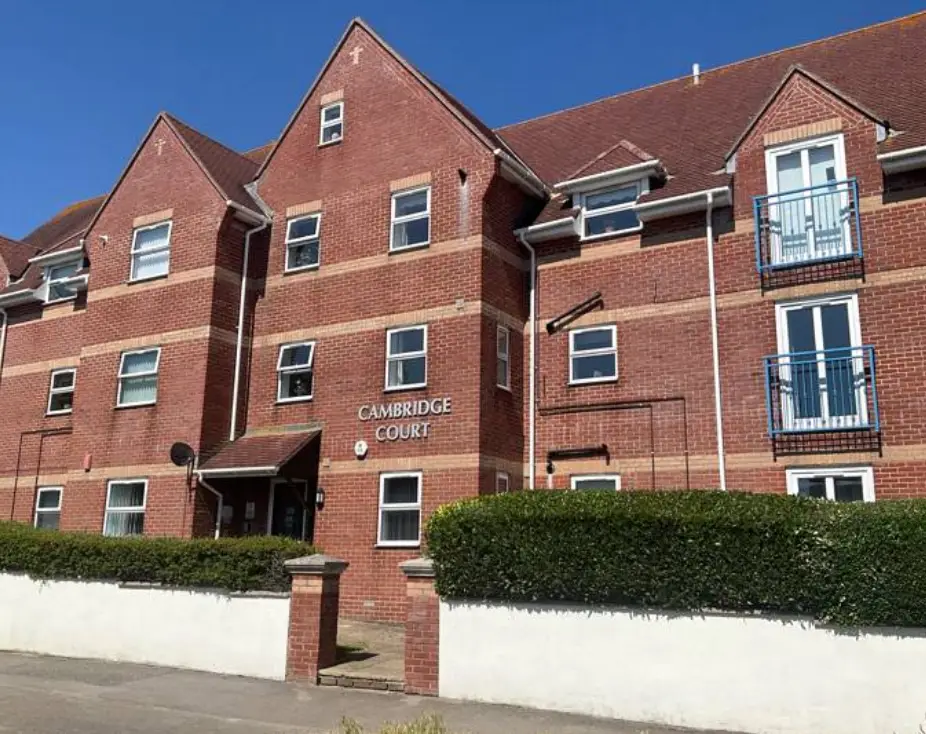
Our surveyor has completed a communal management survey at Cambridge Court, Verne Road, Weymouth, Dorset, DT4 0RX. The work was carried out to confirm the shared areas of the building meet current health and safety requirements.
For the people responsible for a residential block, the question is usually the same. Do you know what is in the communal areas, and can you prove you have managed it? A management survey answers both.
Why Communal Areas Sit With The Freeholder, Not The Residents
Individual flats are domestic premises. The shared parts of the same building are not.
Under the Control of Asbestos Regulations 2012, the duty to manage asbestos applies to non-domestic premises, and that includes the communal areas of residential blocks. Stairwells, entrance halls, corridors, bin stores, plant rooms, boiler cupboards and shared lofts all fall to whoever holds responsibility for maintenance and repair. In practice that is the freeholder, the managing agent or the landlord.
The duty does not depend on anyone finding asbestos. It starts with taking reasonable steps to find out whether asbestos-containing materials are present, then recording what you know and keeping it under review.
What The Survey at Cambridge Court Involved
A management survey is non-intrusive. The aim is to locate asbestos-containing materials that could be disturbed during normal occupation, cleaning, repairs or routine maintenance, and to assess the condition they are in.
Our surveyor inspected the accessible shared areas of the building and recorded the location, extent, type and condition of any suspected ACMs. Where a material cannot be identified on sight, a sample goes to a UKAS-accredited laboratory for analysis. All of our surveyors are qualified to BOHS P402 standard or higher.
The output is a record the building’s managers can actually use: what is present, where it is, what condition it is in and what to do about it. That is what lets a contractor arriving on site be told exactly what to avoid before any work starts.
What Happens After the Report Lands
Finding asbestos does not mean it has to come out. Material in good condition, in a place where it will not be disturbed, is usually safest left in place, labelled and monitored.
What matters is that the register is shared with anyone who might work on the building, reviewed when the condition changes, and updated after any refurbishment. Removal only becomes the answer where a material is damaged, deteriorating, or sits in the way of planned works. Where that applies, we carry out the removal and the disposal, and hand back the paperwork to evidence it.
Any block built or refurbished before 1999 can contain asbestos, since the UK ban was not complete until then. Blocks of flats along the Dorset coast fall into that bracket more often than not.
Arranging a Survey For Your Building
If you manage a residential block in Weymouth or elsewhere in Dorset and there is no current asbestos register for the communal areas, that is the gap worth closing first.
Call 0239 307 2182 or email admin@meyerenvironmental.co.uk to discuss an asbestos survey Weymouth for your building. You can also message us on WhatsApp or send an enquiry form and we will come back to you with a quote.